I am based in Switzerland working towards my PhD under the supervision of Prof. Mbengue. I also work as a legal counsel in an environmental management consultancy.
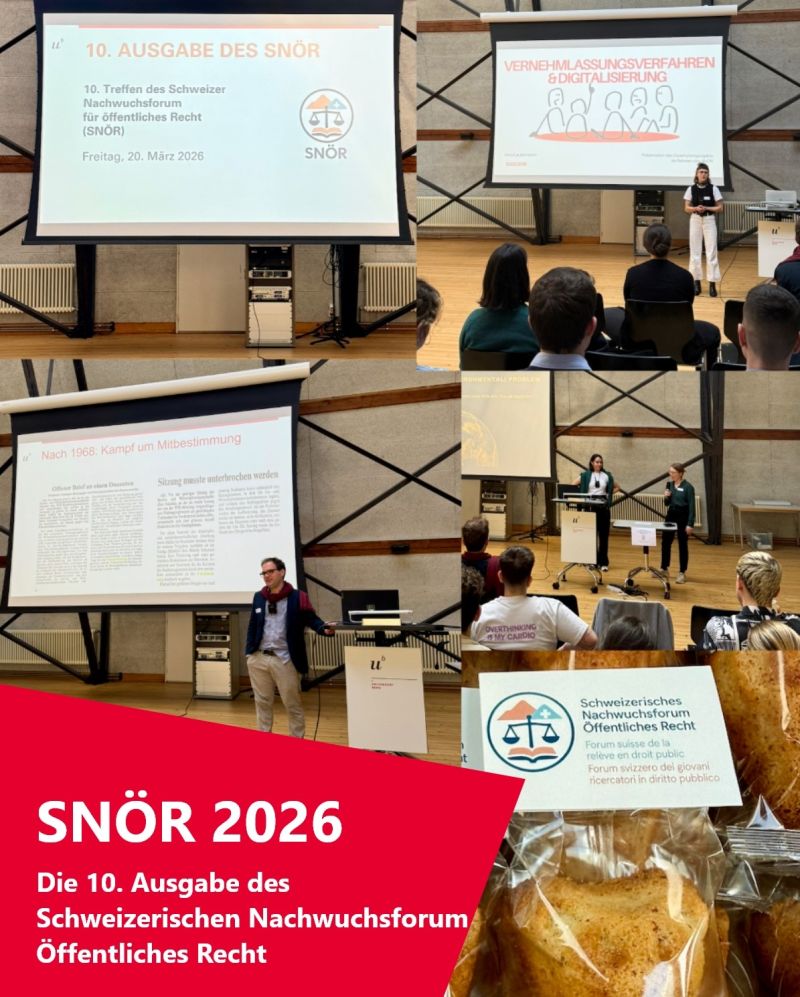
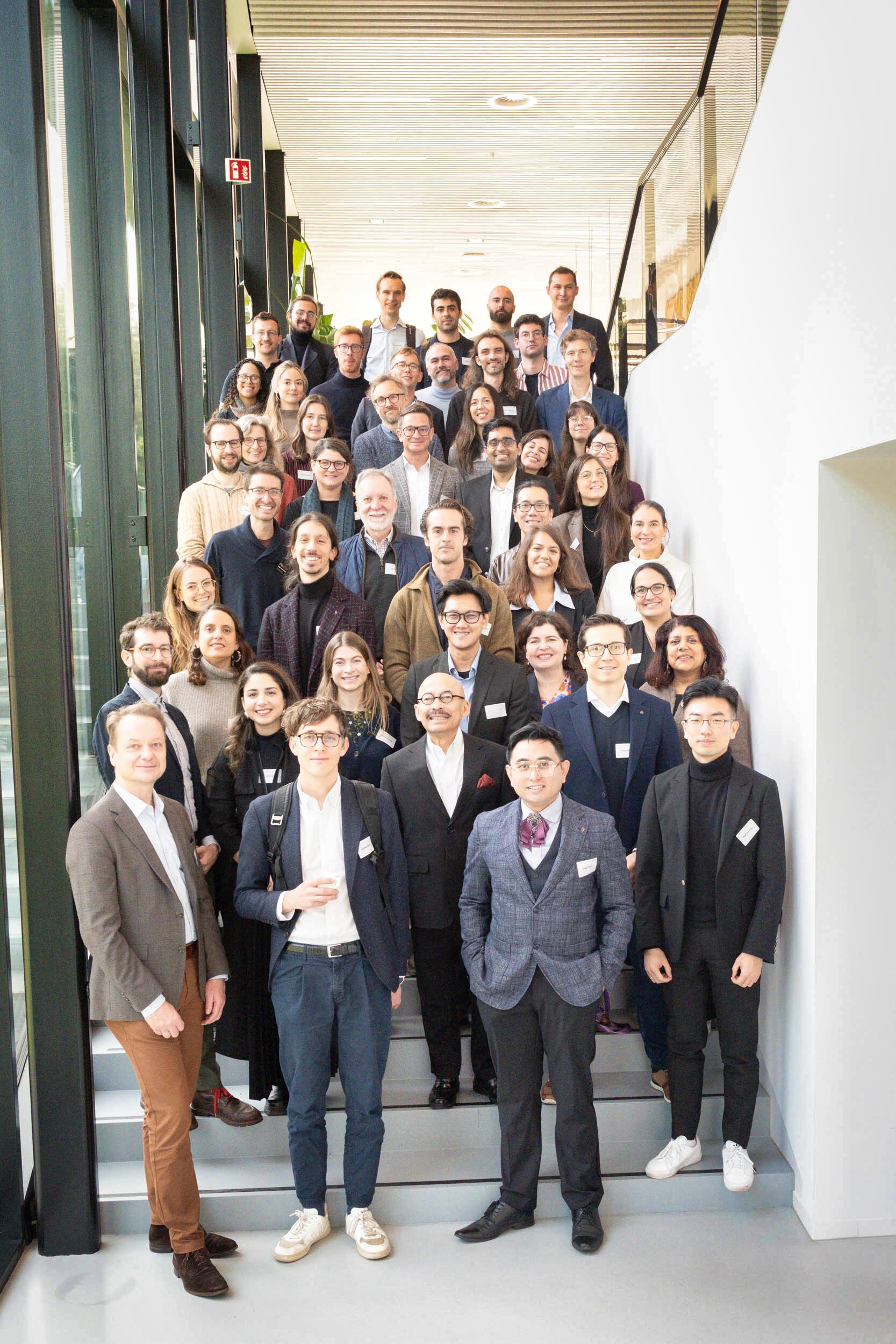
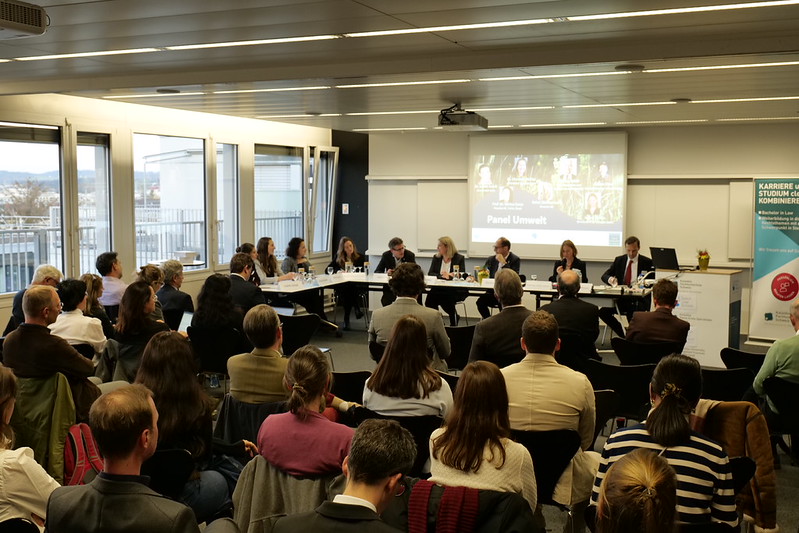
A fun and enriching day organised by the Swiss Young Scholars’ Forum on Public Law (SNÖR) has come to a close. I had the opportunity to present my doctoral research, entitled «Moving International Environmental Law into a new Era: A Proposal to put Earth System Law into Practice».
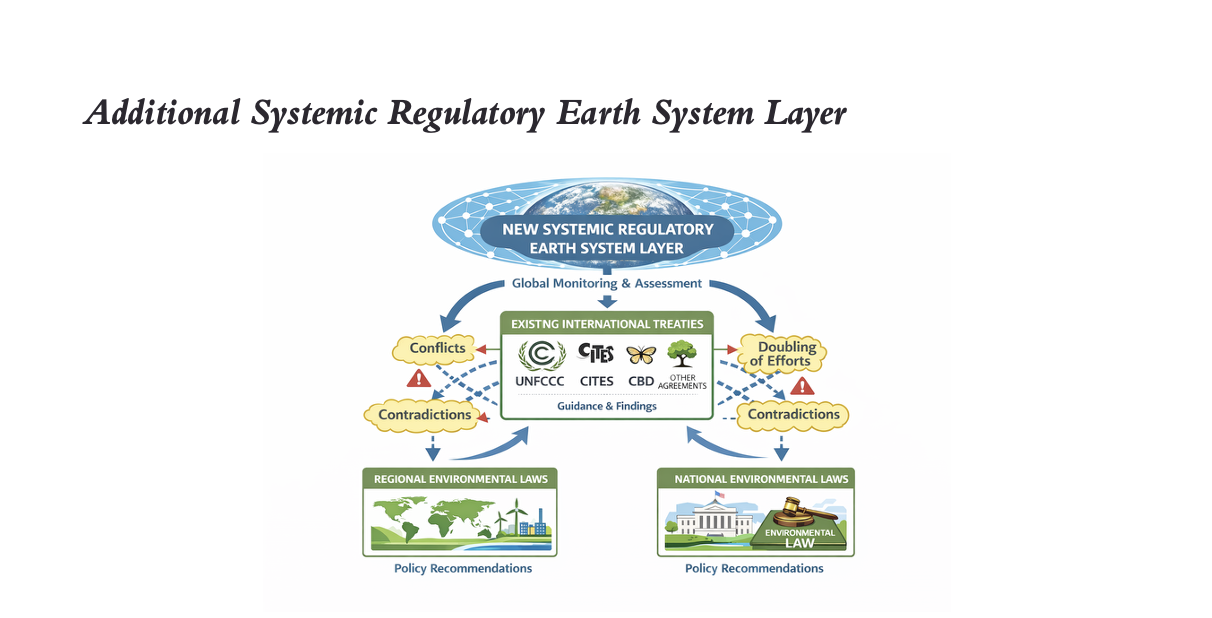
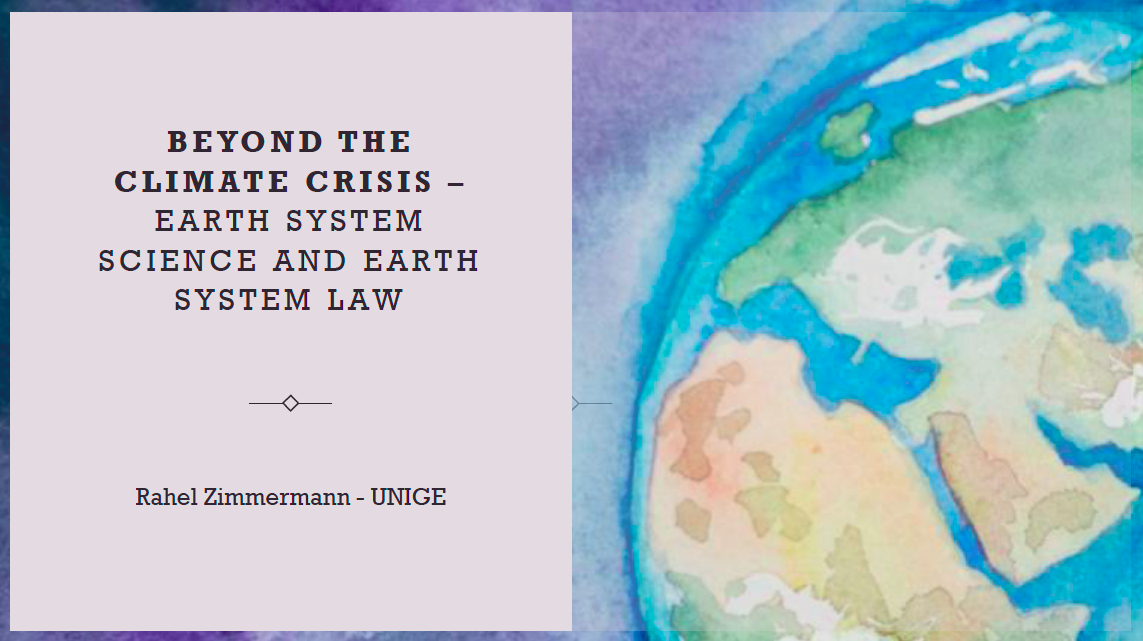
In my presentation, I explained to my fellow doctoral researchers how my doctoral thesis draws on the Interactional Theory of International Law as well as insights from Earth System Science, Earth System Governance, and Earth System Law literature to undertake an in-depth diagnosis of international environmental law’s deficiencies. One of its main deficiencies is the absence of an actor or mechanism responsible for considering the broader, interconnected Earth system as a whole. To address this gap, I argue for the introduction of an additional systemic regulatory Earth system lawyer that keeps track of the overall state of the Earth system and gives inputs and guidance to the existing multilateral environmental agreements, as well as for regional and national environmental regulations in order to achieve a better net environmental outcome for the Earth system (the illustration above was created using AI).
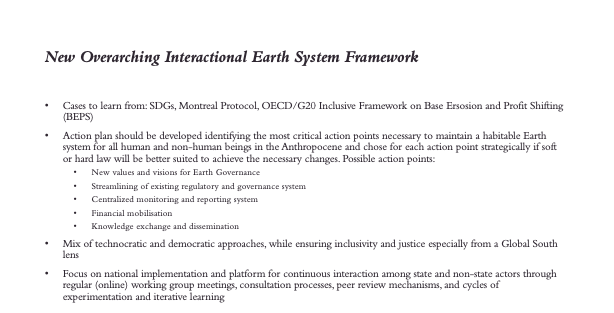
Learning from the Sustainable Development Goals (SDGs), the Montreal Protocol, and the OECD/G20 Inclusive Framework on Base Erosion and Profit Shifting (BEPS), my proposal for a new overarching interactional Earth System Framework consists of an action plan, that would chose for each action point strategically if soft or hard law is better suited to achieve the necessary changes, and would consist of a mix of technocratic and democratic approaches.
Please feel free to get in touch if you have any questions or comments on this idea for a new reform proposal.
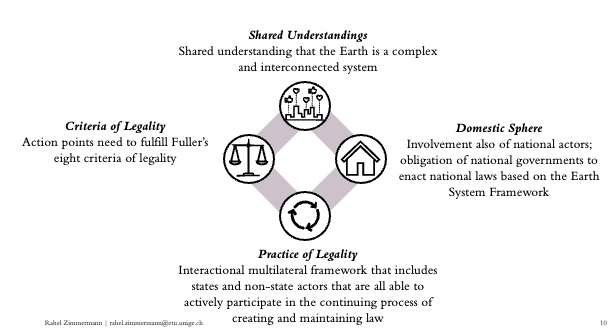
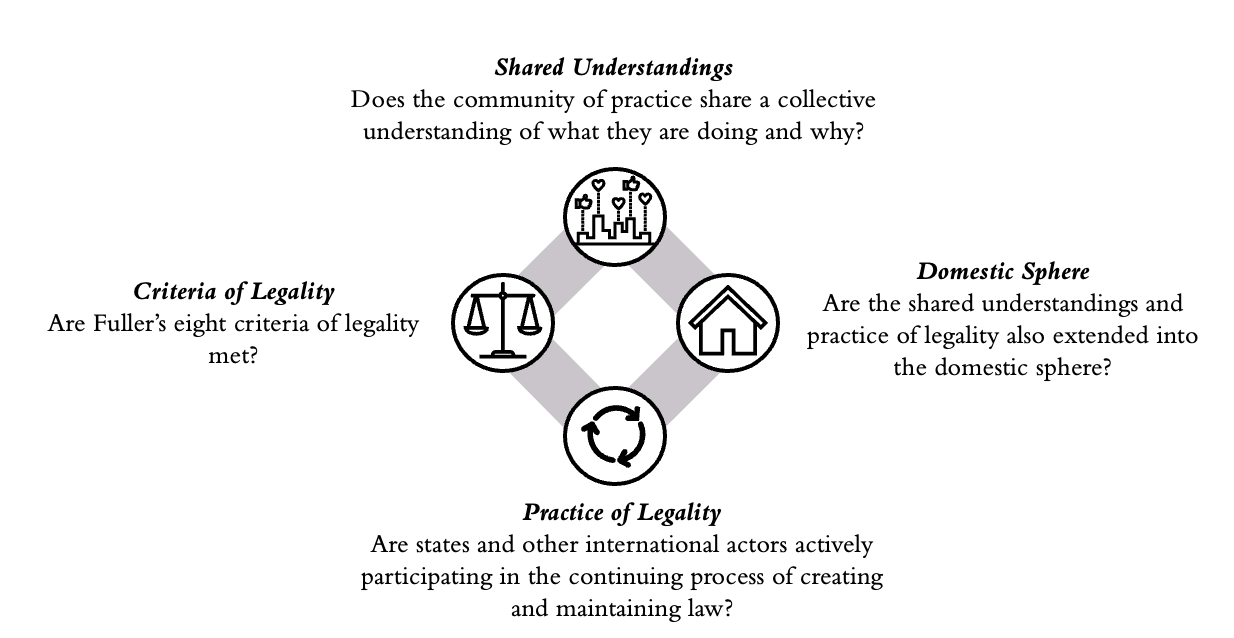
I had the great honour of presenting parts of my doctoral research in one of the parallel sessions. In my presentation, entitled «Transitioning Earth System Law: From Exploratory Debate to In-Depth Reform Analysis», I argued that Earth System Law scholarship has already identified critical deficiencies within international environmental Law (IEL) and suggested numerous avenues for reform. Yet, all proposals so far have remained underdeveloped, often outlined only briefly and without systematic assessment of their comparative strengths, limitations and political feasibility. Therefore, to move the field forward, Earth System Law must now transition from exploratory idea generation to in-depth analysis capable of informing concrete legal and policy reform. My doctoral research seeks to provide a first contribution to this next phase and proposes that the Interactional Theory of International Law (cf. slide below) might serve as a valuable analytical lense. In the last part of my presentation, I drew on the example of the OECD/G20 Inclusive Framework on Base Erosion and Profit Shifting (BEPS), which is a very interactional legal framework in international tax law, that could inspire a legal reform proposal for IEL.
At the end of the day, I also had the opportunity to participate in the closing plenary, moderated by Işık Girgiç, where we reflected on the discussions and key insights that had emerged throughout the day.
A summary of the symposium, as well as of the author workshop held on the second day, is available here. The exchanges over the two days were exceptionally enriching, and I received highly valuable feedback on my doctoral research. I will keep you posted on the paper that will synthesise the outcomes of the author workshop and is expected to be published in 2026.
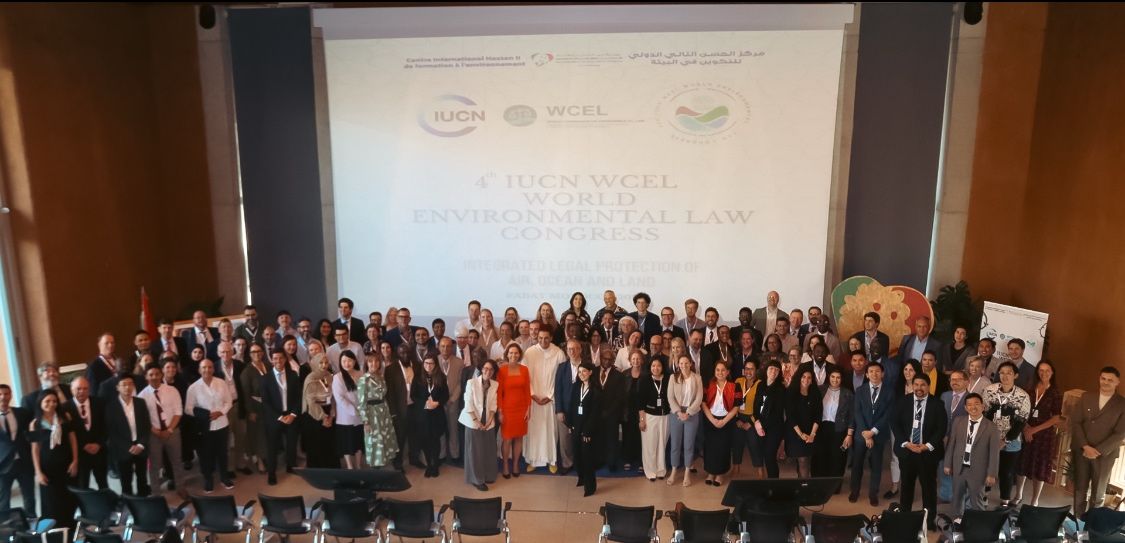
The motion requests the Director General to collaborate with WCEL as well as other relevant Commissions and interested members:
a. to develop concepts and parameters for an international convention or a global legal instrument on soil security;
b. to evaluate and propose national or regional laws and policies to protect, restore and rehabilitate soil ecosystems, with a focus on sustainable agriculture; and
c. to encourage States and regions to adopt appropriate measures and legal frameworks, addressing threats to soil and promoting soil security across all sectors (including but not limited to agriculture, mining and infrastructure), with attention to vulnerable communities, and aligned with the United Nations Convention to Combat Desertification and Land Degradation Neutrality targets.
Update: On this bases, in November 2025, the IUCN WCEL Soil and Sustainable Agriculture Law Specialist Group has begun work on developing a new global legal instrument on soil security. Please feel free to get in touch if you have any questions or would like to learn more about this initiative.
Besides gaining many new insights and connecting with brilliant scholars from all over the world, I was lucky enough to experience the most un-Dutch spring with almost nothing but sunshine, while enjoying the many Dutch specialties like Kings Day, cheese and stroopwafels. I will especially miss my daily bike ride to the office in the picturesque landscape between Zeist and Utrecht Science Park!🚲
Two special highlights during the last three months I want to pick out:
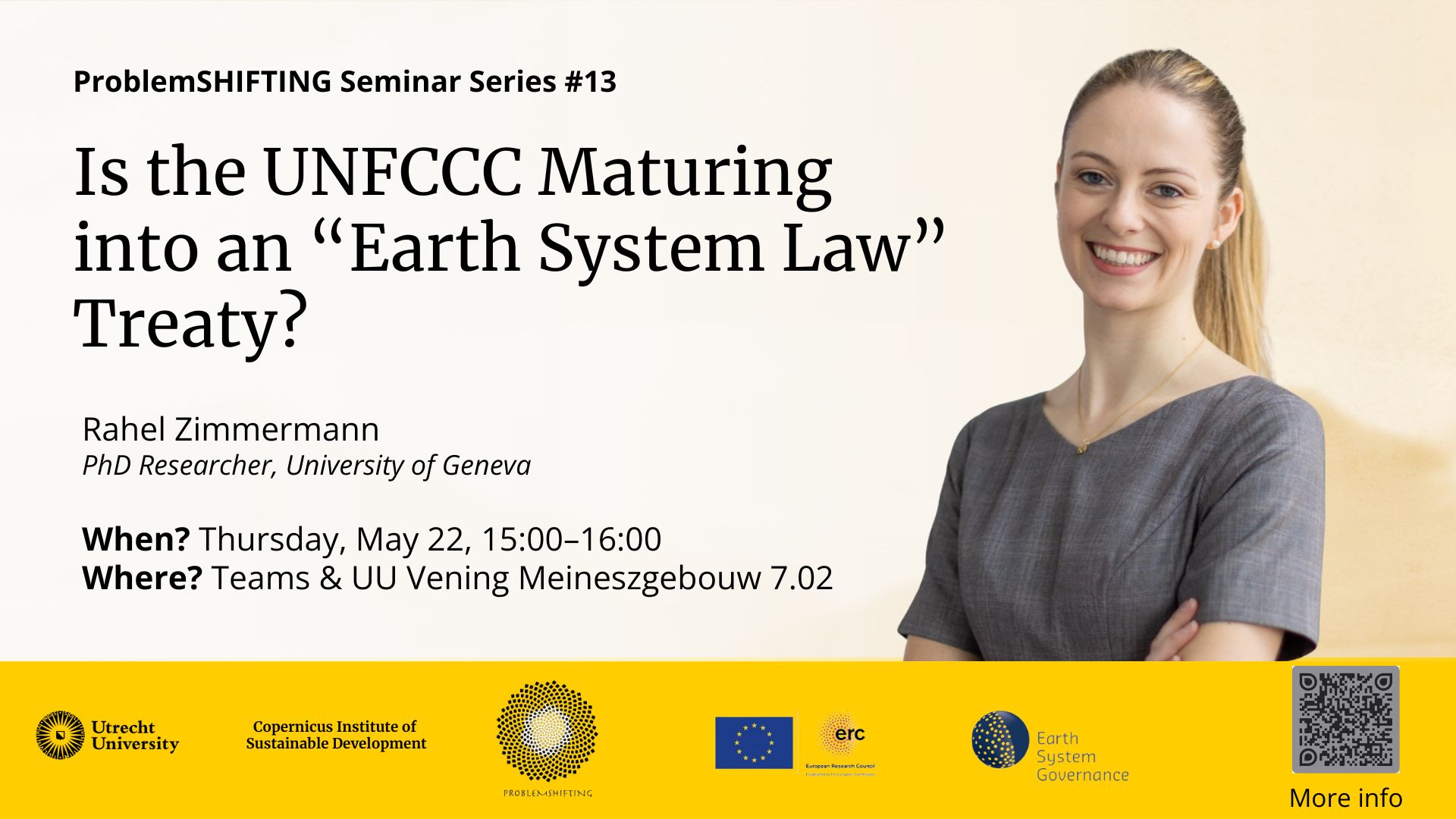
My PROBLEMSHIFTING Seminar on the paper that I am currently working on with Rakhyun E. Kim and Philipp Ratz trying to shed some light into the black hole called UNFCCC that has «swallowed» more and more topics and actors over the past 30+ years.
My thesis presentation to Frank Biermann, Louis Kotzé, Rakhyun E. Kim, Işık Girgiç and Mara Wendebourg whose feedbacks expanded my own perspectives and gave me valuable directives for the final stretch of my doctoral research.
Thank you so much Rakhyun E. Kim for this amazing opportunity and to everybody who made this visit in the Netherlands so memorable with inspiring conversations, fun nights out and new friendships.
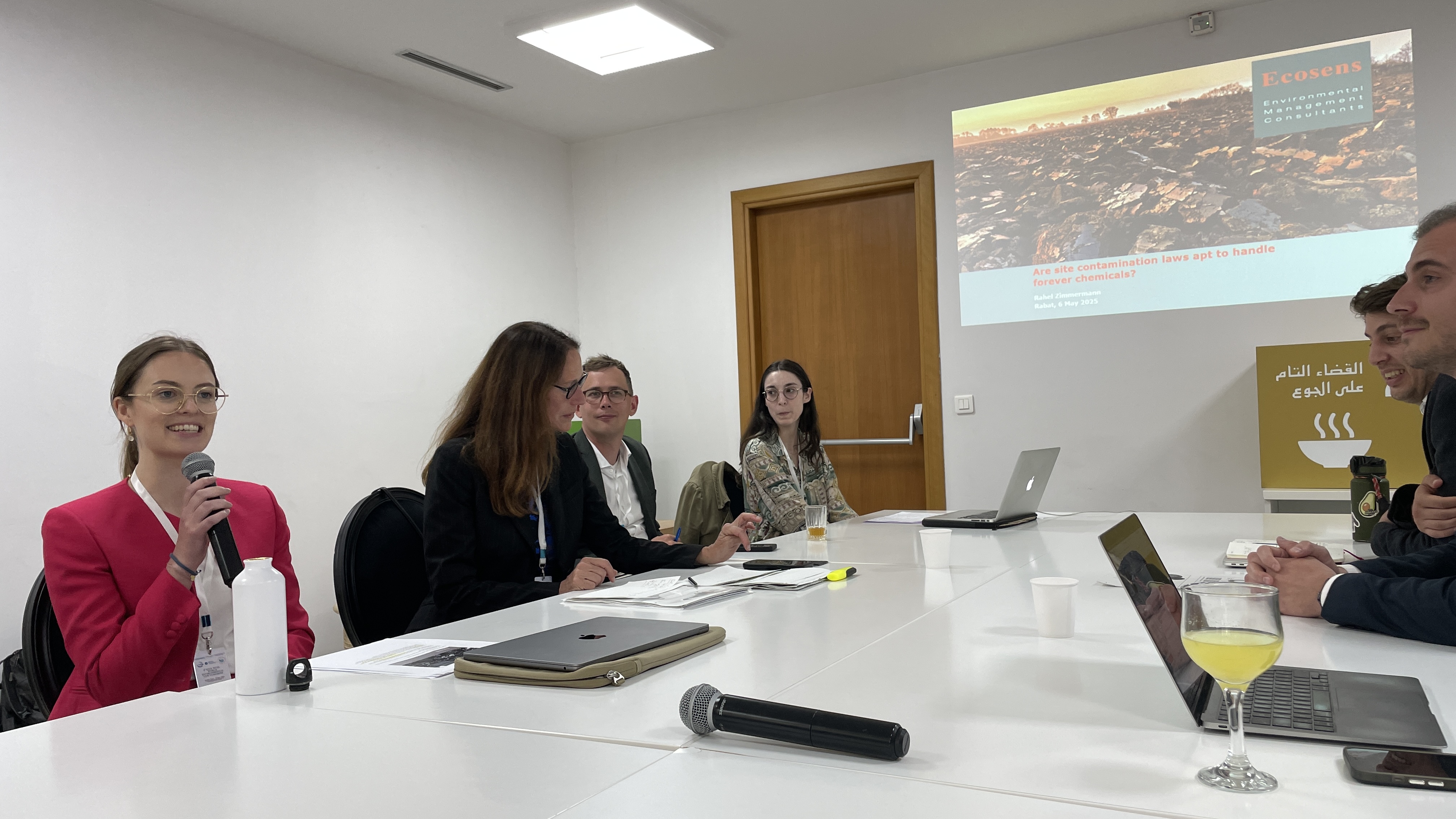
Today, our IUCN WCEL Soil and Sustainable Agriculture Law Specialist Group organised a panel session on «integrated legal protection to secure the multifuncionality of soils». In my presentation, I discussed whether site contamination laws are apt to handle forever chemicals.
Using the example of Swiss site contamination law, I presented the enormous challenges that authorities face when dealing with sites contaminated by forever chemicals (PFAS). In the face of these challenges and in the interests of sustainable development as well as the associated precautionary principle and principle of intergenerational justice, I argued that a rapid and comprehensive ban on forever chemicals is urgently needed.
As part of the research and book project «Sustainable Development in Swiss Law», the 3rd Sustainability Symposium, titled «Sustainable Development: Testing the Law in Practice», took place today at the KLS Kalaidos Law School.
I had the honour of presenting my book chapter «Contaminated Site Law and Intergenerational Equity: are we on the right track?» and discussing our insights in a panel with fellow contributors to the volume and some distinguished practitioners. A report of the symposium, including a short summary of my presentation and the key takeaways of the day, is available here.
Update: The book was published in October 2025. My chapter is now available open access on this website under «Publications».
Today I had the pleasure of presenting part of my doctoral research at the CUSO séminarie annuel 2024 held in Sion under the theme «le futur du droit». In my presentation, I explored the future of international environmental law (IEL), examining why it is currently falling short and how it might be improved.
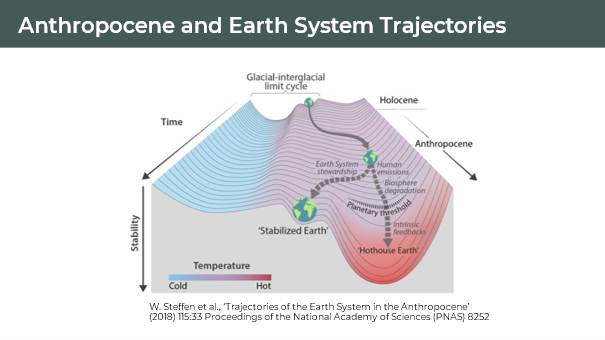
The central argument of my presentation was that IEL remains insufficiently effective because it has not yet adapted to the «new» worldview of the Earth as one single, complex, and interconnected system. Drawing on the concept of the Earth System Trajectories, as well as the Interactional Theory of International Law, I propose the introduction of an overarching goal for IEL. Such an overarching goal could serve as the foundation for a global shared understanding that the Earth is a complex and interconnected system, which we need to move and keep on the «Stabilized Earth» pathway.
Today I could present parts of my research at the séminaire doctoral «la crise climatique au prisme de la recherche doctorale en droit» at the University of Lausanne. In my presentation, I introduced fellow doctoral researchers to Earth System Science and Earth System Law.
The latter is a relatively new legal imaginary that was first proposed in 2019 and is inspired by insights from Earth System Science, including the Anthropocene and the planetary boundaries. The proponents of ESL argue that our current legal systems, particularly international environmental law (IEL), are not apt to respond to the global changes we face today in the Anthropocene. For instance, IEL is highly fragmented and sectoral as we have for each environmental problem a seperate treaty regime. It is also stronlgy state-centric, relying primarily on states as central source of legitimacy and authority. Moreover, IEL generally does not foresee big behavioral changes in societies and lacks the necessary normative ambition.
In my doctoral thesis, I examine these deficiencies of IEL in greater detail and explore ways of how ESL could be translated into practice.
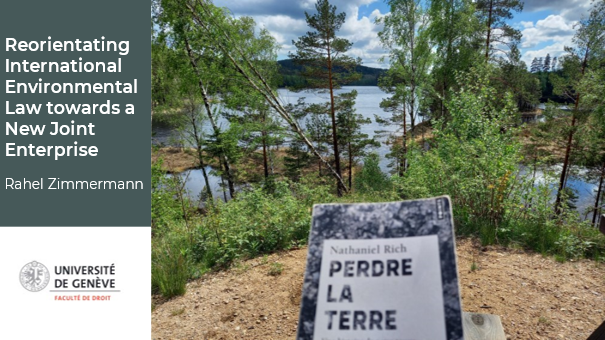
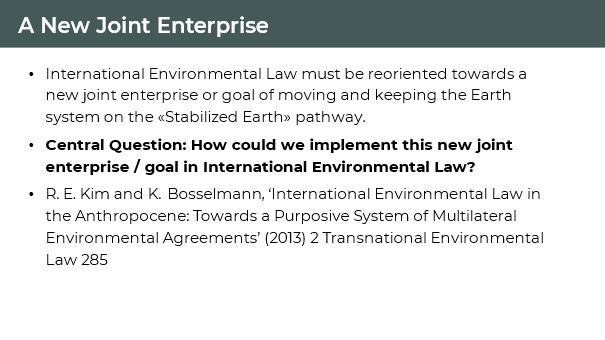
It was a great honour and pleasure to present my current research at the 20th IUCN Academy of Environmental Law Colloquium. In my presentation, I argued for the introduction of an overaching goal or joint enterprise for international environmental law (IEL), towards which all international and national actors have to work.
This idea of an overarching goal for IEL is not a new one. Kim and Bosselmann proposed already in 2013 the introduction of a single, legally binding, and superior «grundnorm» that would provide all international regimes and organizations a shared purpose to which their specific objectives must contribute. My approach, however, differs in that it grounds this overarching goal in Earth system science, specifically in the concept of Earth System trajectories.
Here you can see the «Earth System trajectories». Humans have always lived in the very stable Holocene epoch. Since the turn of the century, however, more and more scientists argue that we have entered a new geological epoch. This new epoch is called the Anthropocene because mankind now is the major environmental force and threatens the planetary stability that we are so used to.
As you can see in the figure, earth has already left the relative warmth of the Holocene to its present position in the hotter Anthropocene, where we find ourselves now at a crossroads with two divergent pathways of the Earth system:
On our current trajectory, the Earth system is on a «Hothouse Earth» pathway driven by human emissions of greenhouse gases and biosphere degradation towards the planetary threshold at around 2 °C. Beyond this threshold the Earth system would follow an irreversible pathway outside of human influence or control.
The other pathway leads to a «Stabilized Earth», warmer and different from anything our species has ever known, but certainly more manageable than a Hothouse Earth. Here, humanity must play an active role as planetary steward by managing on an ongoing basis its relationship with the rest of the Earth system.
So, the science is clear: If the planetary threshold is crossed toward the «Hothouse Earth» pathway, this would pose severe risks for health, economics, political stability and, ultimately, the habitability of the planet for humans. As a consequence, humanity’s common goal needs to be to move the Earth system onto the «Stabilized Earth» pathway.
On that ground, I argue that, to remain relevant in the future, IEL must ensure that humanity steers towards this path. In order to achieve this monumental task, we must reform and reorientate IEL towards this overarching objective, so that all relevant actors work together in a new joint enterprise.
In the remainder of my presentation, I discussed different avenues through which such an overarching goal could be introduced into IEL, as well as criteria for evaluating these avenues in order to identify the most viable and effective reform approach.
My short article The 2022 Declaration to Advance the “One Health” Approach has been published on the “Pathway to the 2022 Declaration”-blog. In this blog jurists can make contributions that could prove useful for diplomats negotiating the 2022 Declaration. I hope you enjoy reading it and if you have comments, do not hesitate to hit me up on LinkedIn or via email.